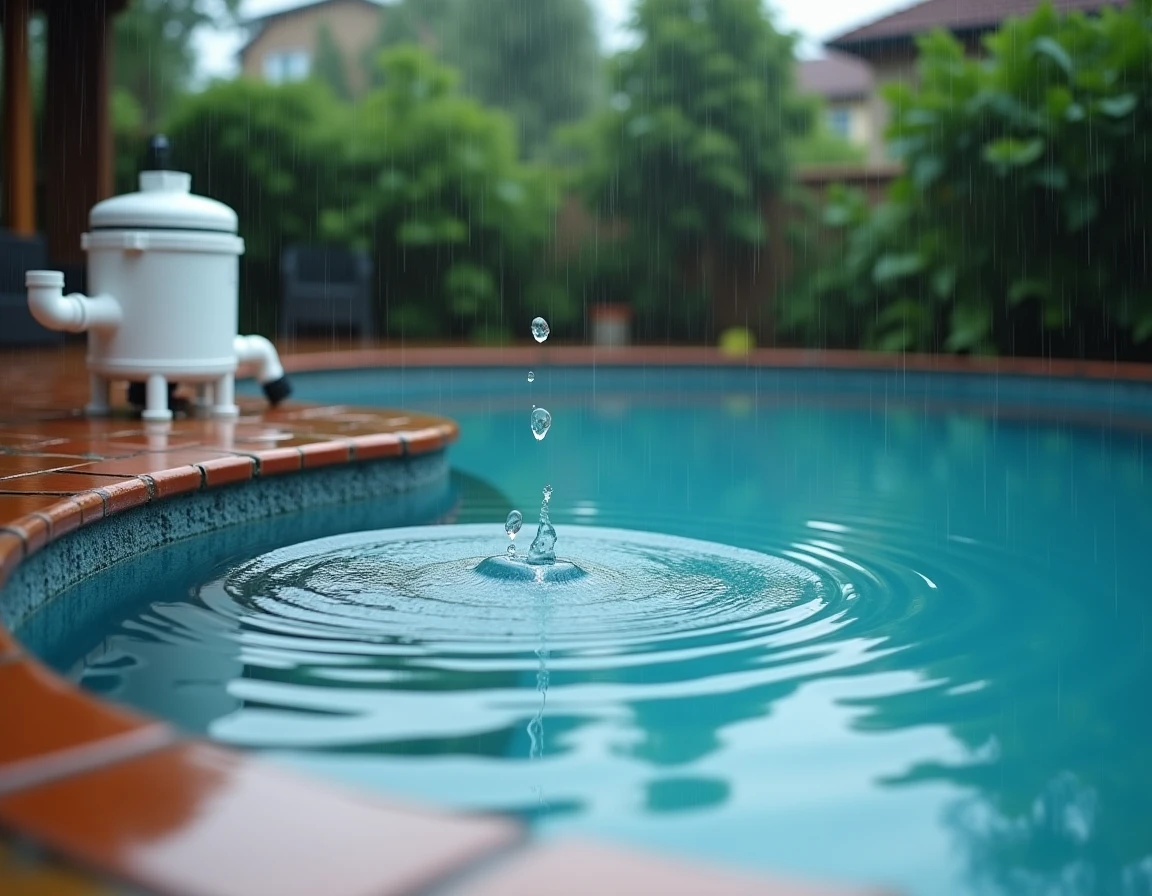
Leaving the pool pump running during a rain shower or turning it off as a precaution: the answer depends less on the rain itself than on the type of weather event and the installation. Light rain, prolonged downpour, thunderstorm with lightning, above-ground or in-ground pool with technical room, each configuration alters the benefit-risk ratio for filtration and equipment.
Filtration during rain or at a standstill: comparison based on weather scenario
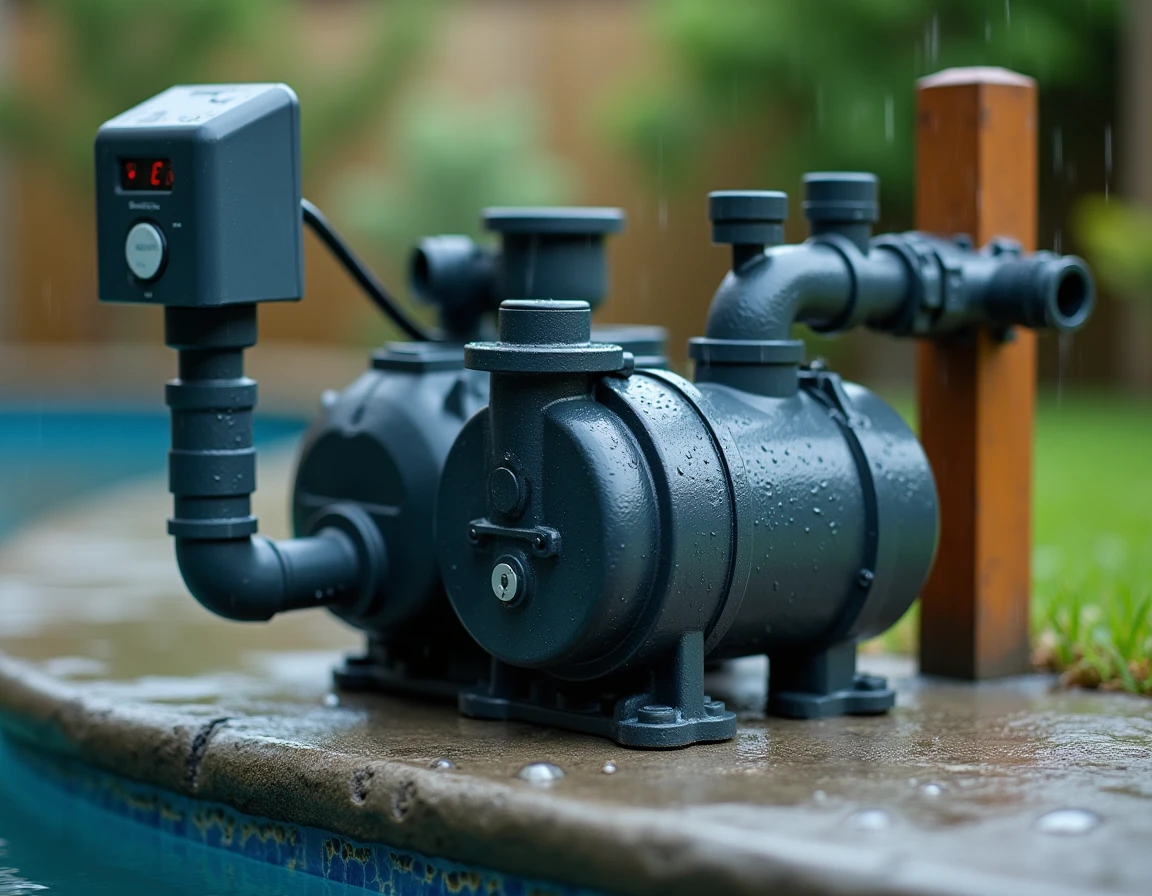
The table below summarizes common situations and the attitude to adopt for the pool pump.
| Scenario | Recommended Filtration | Main Reason |
|---|---|---|
| Light or moderate rain, no wind | Keep running | Homogenize diluted water, limit chlorine drop |
| Heavy and prolonged downpour | Keep running, monitor the level | Mix the added water volume, avoid stagnation |
| Thunderstorm with lightning | Turn off immediately | Risk of electrical surge on the motor |
| Cold winter rain (active winterizing) | Reduced but continuous filtration | Prevent localized freezing and stagnation |
| Above-ground pool without shelter | Turn off and protect the pump | Direct infiltration into the motor |
The question of whether to run the pool pump during rain is therefore decided on a case-by-case basis, depending on the electrical risk and the degree of exposure of the equipment.
Rain and pool water quality: what filtration corrects
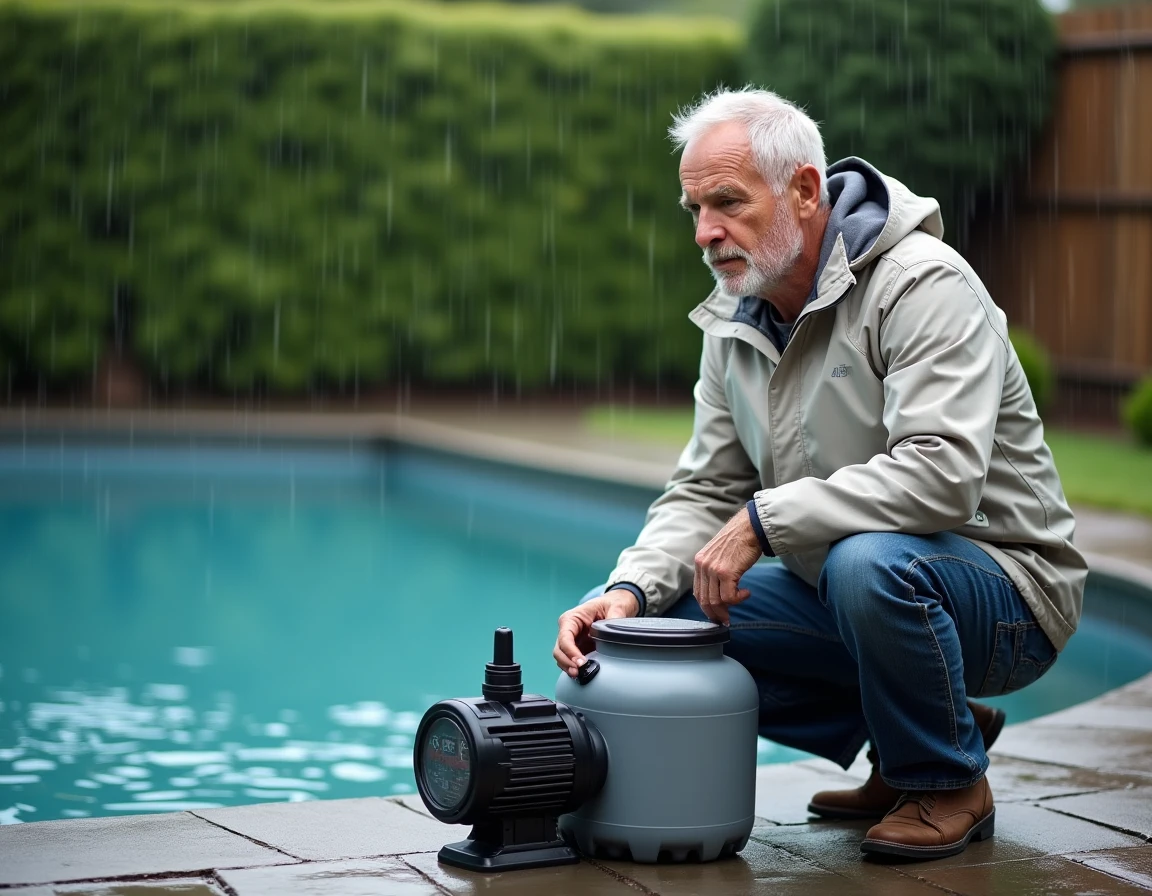
The rainwater that falls into the pool is not neutral. It is low in minerals, often acidic, and carries atmospheric particles, pollen, and even pollution residues. When it falls into the pool, it dilutes the chlorine and lowers the pH.
If the pump is turned off during and after the shower, this untreated water remains on the surface without mixing with the filtered volume. Algae then have favorable conditions: diluted disinfectant, unbalanced pH, and higher surface temperature in summer.
Keeping the filtration active during a typical rain allows for three things:
- Mixing rainwater with the pool volume to homogenize the disinfectant level more quickly
- Passing atmospheric impurities (dust, pollen, debris) through the filter before they settle at the bottom
- Facilitating post-shower chemical correction, because the pH and chlorine will have deviated less if the water has circulated continuously
After heavy rain, a water analysis is still necessary. Shock treatment (unstabilized chlorine, for example) disperses better in a pool whose filtration has been running since the shower.
Thunderstorm and electrical surge: the real danger for the pool pump
Rain alone does not threaten the motor of a pump properly installed in a closed technical room. The real risk comes from lightning and the electrical surges it causes on the power grid.
A lightning strike, even indirect, can fry the capacitor or the electronic board of a variable speed pump. Damage is not always covered by the manufacturer’s warranty if the electrical installation does not comply with protection standards.
When turning off the pump becomes a priority
As soon as forecasts predict a thunderstorm or the first flashes of lightning appear, turning off the power supply to the pump (and ideally to the entire filtration system, including the salt electrolyzer if present) is the only effective precaution. A surge protector on the electrical panel reduces the risk but does not guarantee total protection against a nearby strike.
Once the storm has passed, quickly restarting the filtration helps compensate for the downtime and treat the water loaded with debris from the wind and rain.
Above-ground pool and in-ground pool: two different logics
User feedback on specialized groups shows a clear divergence between these two types of installations.
In an in-ground pool with a covered technical room, the pump is protected from water splashes. Leaving it running during ordinary rain poses no mechanical problem. The sand or cartridge filter continues its work normally.
In an above-ground pool with an exposed pump, the situation changes. The filtration unit is often placed directly on the ground, without protection against splashes or runoff. Heavy rain can cause infiltration into the motor or electrical connections. In this case, turning off the pump and putting it in a safe place (under a canopy, in a garage) is the basic precaution.
Protecting an exposed pump without moving it
If bringing the pump inside during every shower is not realistic, a few solutions reduce the risk:
- A ventilated protection box placed around the filtration unit that blocks direct rain while avoiding overheating
- Raising the pump on a draining support (slab, cinder blocks) to prevent stagnant water from reaching the motor base
- Connecting to a waterproof socket with at least IP44 rating, with a dedicated differential circuit breaker
Filtration duration after a shower: adjusting pump time
After a prolonged rainy episode, the volume of water in the pool has increased and its chemical composition has changed. Extending the filtration duration by a few hours after the shower helps the system catch up on the imbalance.
The logic is simple: the more untreated water enters the pool, the more time the filter needs to process it completely. Checking the pH, adjusting the chlorine, and letting the pump run until the water regains its clarity remains the most reliable method.
In active winterizing, repeated episodes of cold rain call for reduced but regular filtration rather than a complete shutdown. This approach prevents stagnation and localized freezing in the pipes, two common causes of damage to the hydraulic circuit.
The decision criterion boils down to a distinction: rain without thunderstorm, filtration remains active to protect the water quality of the pool. Thunderstorm with lightning risk, electrical safety takes precedence, and the pump is turned off. Everything else, filtration duration, chemical treatment, equipment protection, stems from this initial rule.