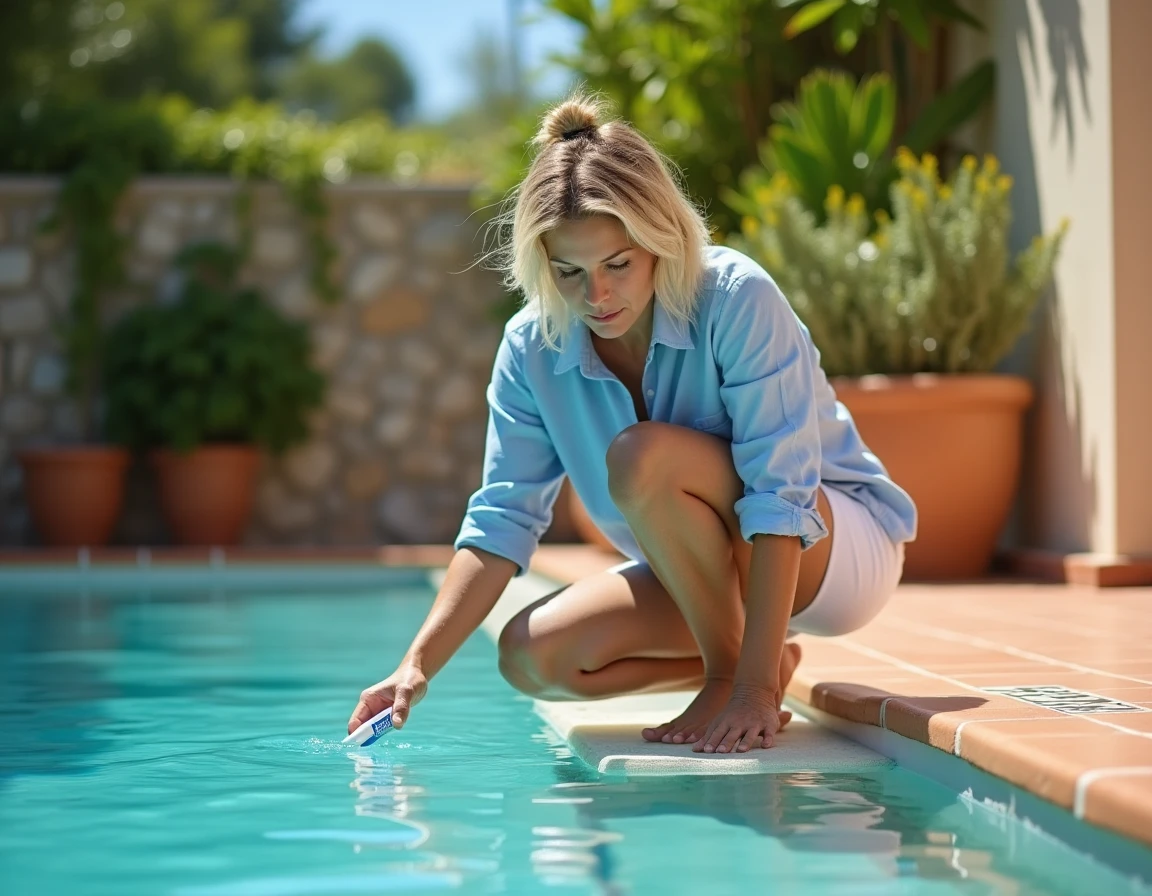
A pool that turns green or cloudy in the middle of July is often a sign of an imbalance that has developed over several days. Keeping clear water all summer relies less on spectacular actions and more on a well-calibrated routine, adapted to the actual conditions of your pool. Water temperature, usage, weather: each parameter alters the demand for filtration and disinfectant, sometimes from one day to the next.
Chloramines and chlorination by-products: the trap of over-chlorination
Have you ever noticed that strong “chlorine” smell around a pool? It’s not the tablets that smell, but the chloramines, produced when chlorine reacts with organic matter (sweat, sunscreen, urine, plant debris). The more dirt there is in the water, the more chlorine is depleted neutralizing it instead of disinfecting.
Since 2022, European health agencies have tightened the thresholds for trihalomethanes and chloramines tolerated in the air of indoor pools. For a private outdoor pool, the direct health risk is lower, but the mechanism remains the same: over-chlorinated water is not necessarily well disinfected.
The solution lies in reducing organic inputs upstream. Ask each swimmer to shower before entering the pool. Remove leaves and insects with a net before they decompose. Cover the pool at night. These three actions measurably reduce the demand for chlorine, allowing you to maintain an active residual without overdosing.
To have clear water in your pool, it’s better to act on the source of pollution than to compensate with massive chemical treatment.
Filtration during heatwaves: adjust the duration to the thermometer
Filtration does the bulk of the work. It removes suspended particles and prevents algae from settling. Where many owners go wrong is by running the pump on a fixed schedule all season, without considering the water temperature.
When the water exceeds a certain heat threshold, microorganisms multiply much faster. The filtration duration must follow the rise in temperature. The common rule is to divide the water temperature by two to get a daily filtration hour count. With water at 30 °C during a heatwave, the pump should therefore run for at least fifteen hours.
Since 2022, professionals have noticed a sharp increase in green and yellow algae blooms during heatwaves, even in properly chlorinated pools. The combination of high temperature, storms (which carry organic matter), and under-filtration makes traditional protocols insufficient in some regions.
Two points to check during heat peaks:
- The filter (sand, cartridge, or diatomaceous earth) needs to be cleaned more often, as it clogs faster with increased organic load. An additional backwash per week makes a difference.
- The pump’s operating hours are better spread throughout the day rather than concentrated at night, so that filtration is active when heat and swimming are at their peak.
- If your pump is variable speed, prefer a continuous medium flow rather than a high flow for a short period: electricity consumption decreases and water circulates better in the pool.
Chemical balance of the water: pH, alkalinity, and free chlorine
Adding chlorine to water with a pH that is too high is a waste of product. Above a pH of 7.6, chlorine’s effectiveness drops significantly. The disinfectant is present in the water, but it hardly works anymore.
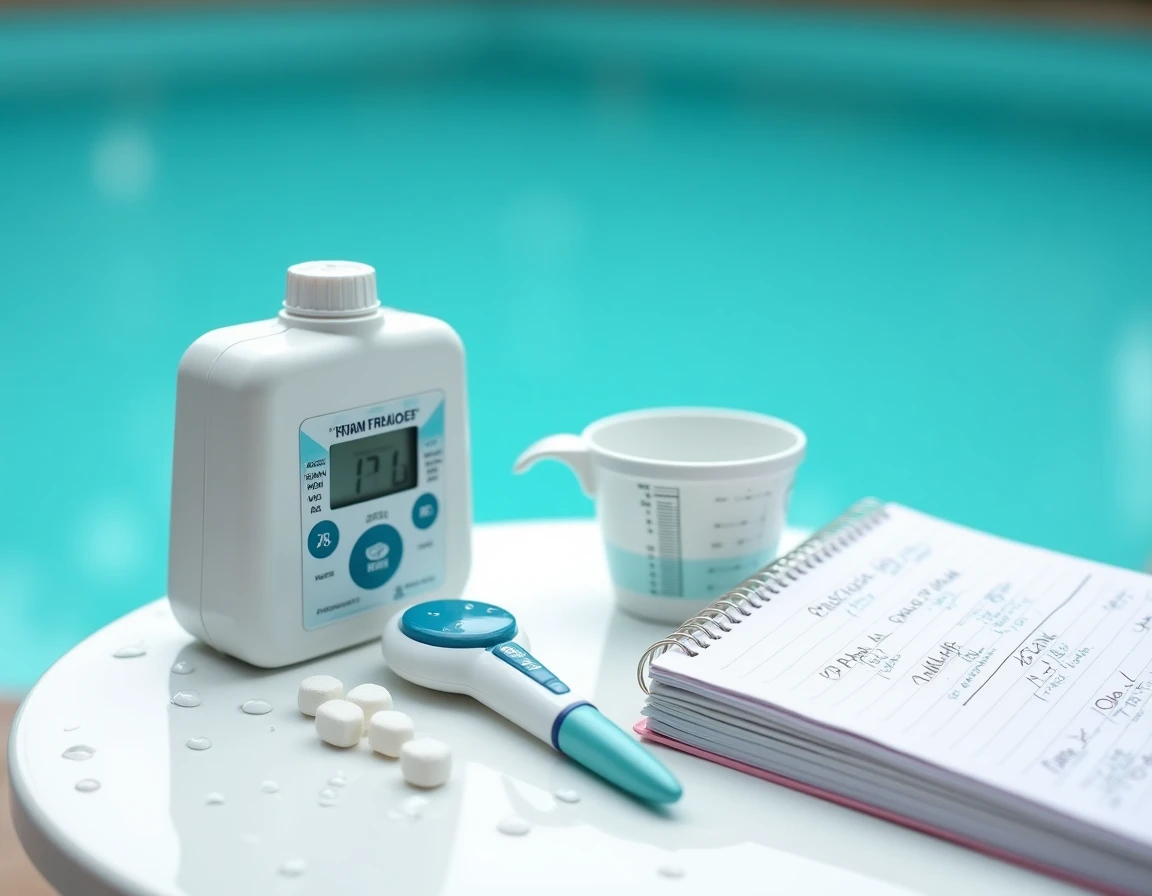
Testing the pH and adjusting it before any chlorination is the first logical step. A correct pH is between 7.2 and 7.4 for chlorine treatment. Alkalinity (TAC) acts as a buffer: if it is too low, the pH fluctuates constantly, and you spend your time correcting it.
With the rise of connected sensors, it is now possible to monitor pH, free chlorine levels, and temperature from a phone app. These probes submerged in the pool send alerts when a parameter drifts. They do not replace a manual confirmation test from time to time, but they allow you to react on the same day instead of discovering a problem three days later.
Shock chlorine: when and how to use it
Shock chlorine is not a preventive treatment. It is used to recover water that has gone off, for example after a heavy storm or a busy weekend. Apply it in the evening, with filtration running all night, to maximize its action because UV rays from the sun quickly degrade unstabilized chlorine.
Adjust the dose to the actual chlorine demand of your pool rather than following a generic chart printed on the packaging. A free chlorine test before and after allows you to verify that the treatment has worked.
Cleaning the pool and maintaining the filter: the mechanical part
Chemistry does not compensate for a dirty pool. Deposits on the bottom, greasy waterline, and full skimmer baskets reduce filtration efficiency and increase treatment product consumption.
- Empty the skimmer baskets and the pump pre-filter at least twice a week during the peak season.
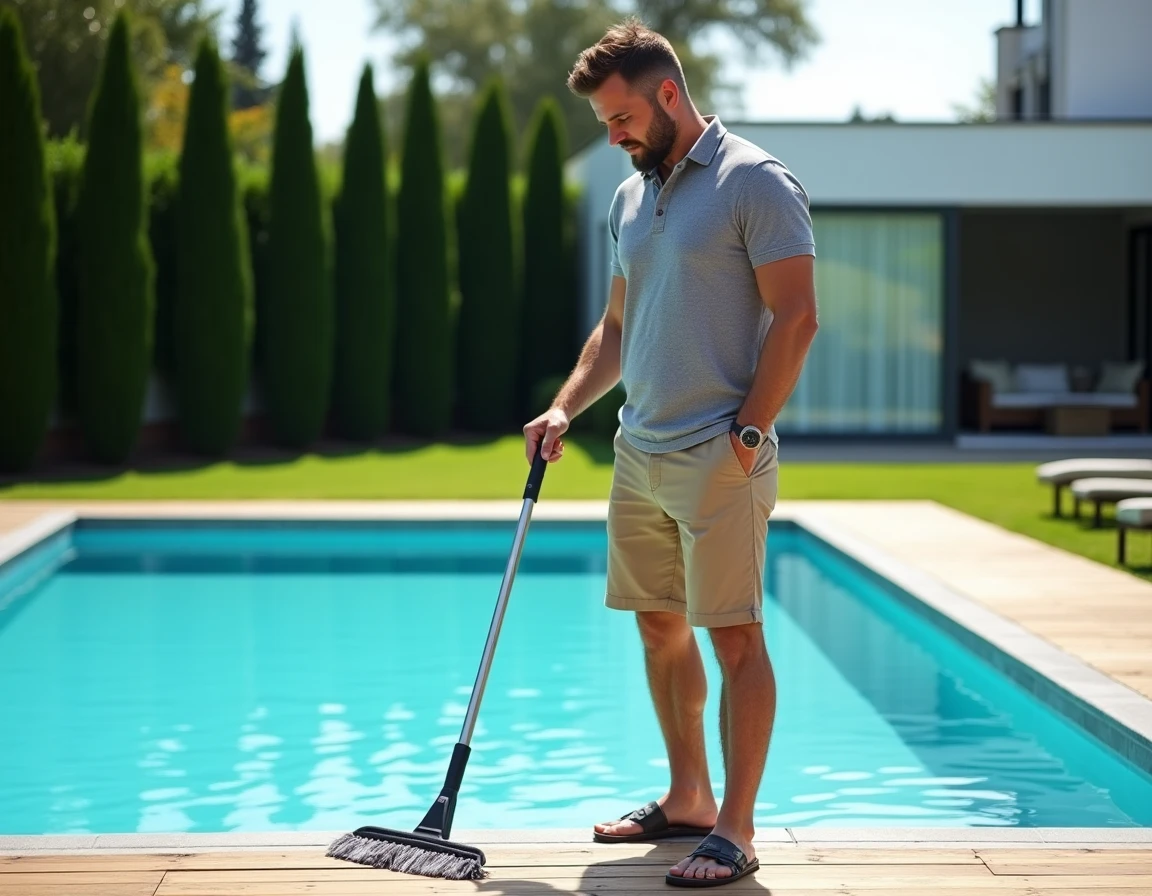
- Brush the walls and waterline weekly to detach the biofilm before it becomes visible.
- Use a robot or a bottom vacuum one to two times a week to remove particles that escape the surface system.
- Check the filter pressure on the manometer: an increase of 0.3 to 0.5 bar compared to the pressure after cleaning indicates that a backwash or cartridge replacement is necessary.
A clean liner and a well-maintained filter do more for water clarity than perfect chemical dosing in a neglected pool. Regular mechanical cleaning remains the foundation of clear water, especially when temperatures rise and the pool is used every day. Combine these actions with rigorous chemical monitoring, and your pool will maintain its clarity from May to September without any unpleasant surprises.