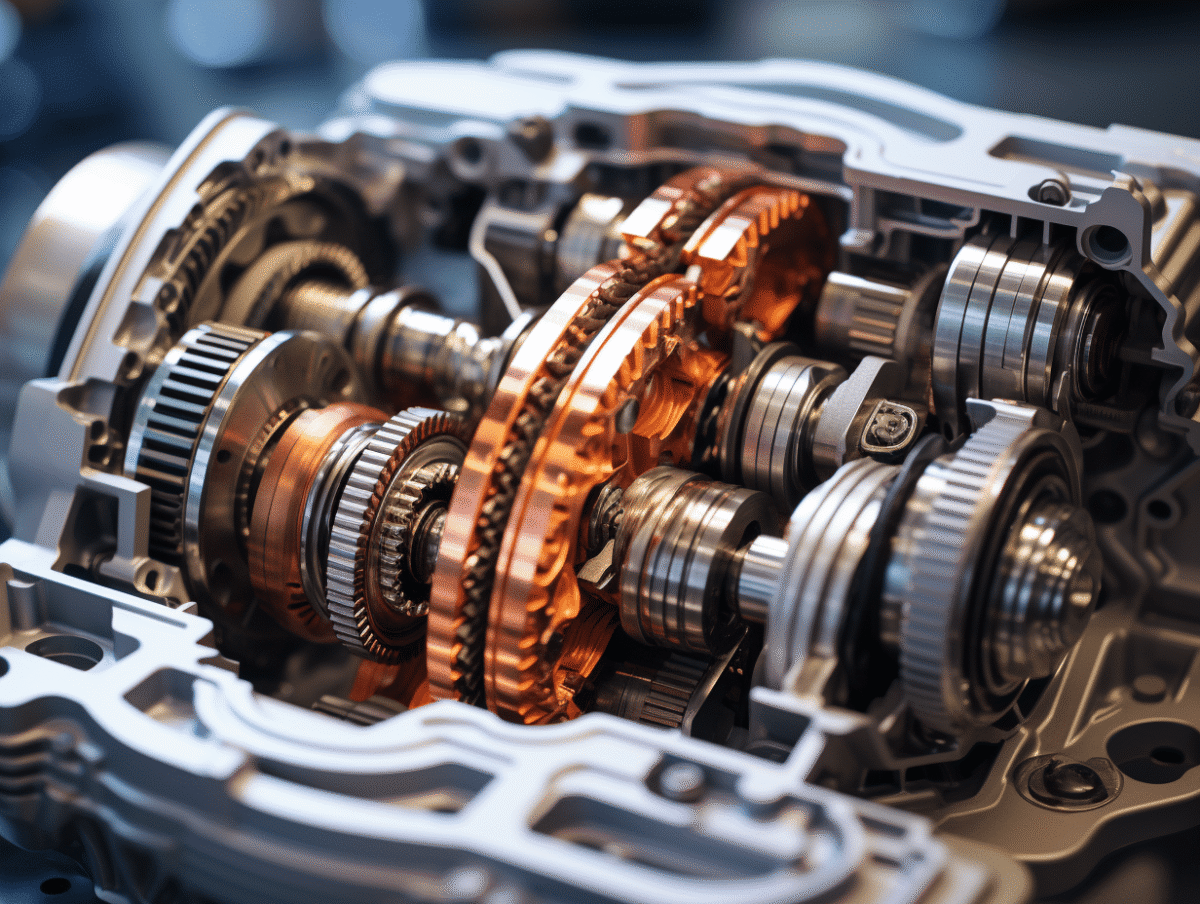
The DSG7 transmission, designed by the Volkswagen group, represents a significant advancement in the automotive world, promising smooth and rapid gear changes. However, despite its renowned German engineering, concerns are emerging regarding its reliability. Owners and industry experts have reported various issues, ranging from delayed responses to mechanical failures. A thorough investigation of the internal components of this dual-clutch automated transmission allows for a better understanding of the challenges of its long-term performance and identifies key points of caution for potential users.
Reliability Analysis of the DSG7 Transmission
Understanding the reliability of the DSG transmission from the Volkswagen Audi group primarily involves a meticulous exploration of testimonials and technical data. The DSG7 transmission, also known as the DQ200, is a technological feat that requires specific maintenance to ensure optimal reliability. While some users report flawless performance, others mention DSG transmission issues. These problems, often attributed to inadequate reprogramming of the Mechatronic control system, highlight the need for specialized expertise during maintenance.
Indeed, the Mechatronic system, when reprogrammed by specialists like Docteur BVA, can enhance the performance of the DSG7 transmission by increasing its torque limit. Originally designed to handle a torque of 200 to 250 Nm, the DQ200 can, after reprogramming, support up to 400 Nm. However, without this appropriate technical intervention, the DQ200 may exhibit failures, reinforcing the importance of maintenance performed by competent professionals equipped for such tasks.
The reputation of a transmission as sophisticated as the DSG7 thus relies on a precise chemistry between cutting-edge technology and specialized maintenance. The smooth and responsive DSG shifts that drivers appreciate cannot endure without the transmission receiving proper monitoring and Mechatronic reprogramming conducted according to best practices. Understanding the specific torque limits and paying attention to warning signals emitted by the DSG clutch are crucial for enjoying the DSG speed over time.

Details of Components and Their Impact on Performance
The DQ200 transmission, the central element of the DSG7 system, stands out for its ability to manage a torque range of 200 to 250 Nm in its original configuration. This torque range, already notable for an automatic transmission system, can be increased to 400 Nm through a Stage 3 reprogramming of the Mechatronic control system. This significant increase in torque capacity allows the DQ200 to be adapted to more powerful engines while maintaining the fluidity and responsiveness of gear shifts.
Speaking of engines, the DQ200 is primarily paired with the 1.2 and 1.4 TFSI/TSI engine series, as well as the 1.6 and 2.0 TDI engines, commonly used in car models from brands such as VW (Polo, Golf, Jetta, Beetle), Audi (A1, A3), Seat (Ibiza, Leon), and Skoda (Fabia, Octavia). The compatibility between these engines and the DQ200 is essential for harmonious and optimal performance, with each engine benefiting from the precise torque management that the DSG7 transmission provides.
In terms of maintenance, the DQ200 is distinguished by its need for less frequent servicing while still being subject to specialized interventions. The quality and specificity of the oil used for the DSG transmission play a key role in preserving performance and durability. The transmission fluid change, a fundamental operation for the proper functioning of the system, must be performed in accordance with the manufacturer’s recommendations to maintain performance standards.
The synergy between the various components of the DSG7 transmission, from electronic management with Mechatronic to adaptation to different engine models, determines the driving experience and overall vehicle performance. Carefully follow maintenance recommendations and consider reprogramming only if performed by experienced professionals, such as those at Docteur BVA, to ensure a tangible improvement in your DSG7 transmission’s capabilities without compromising its reliability.