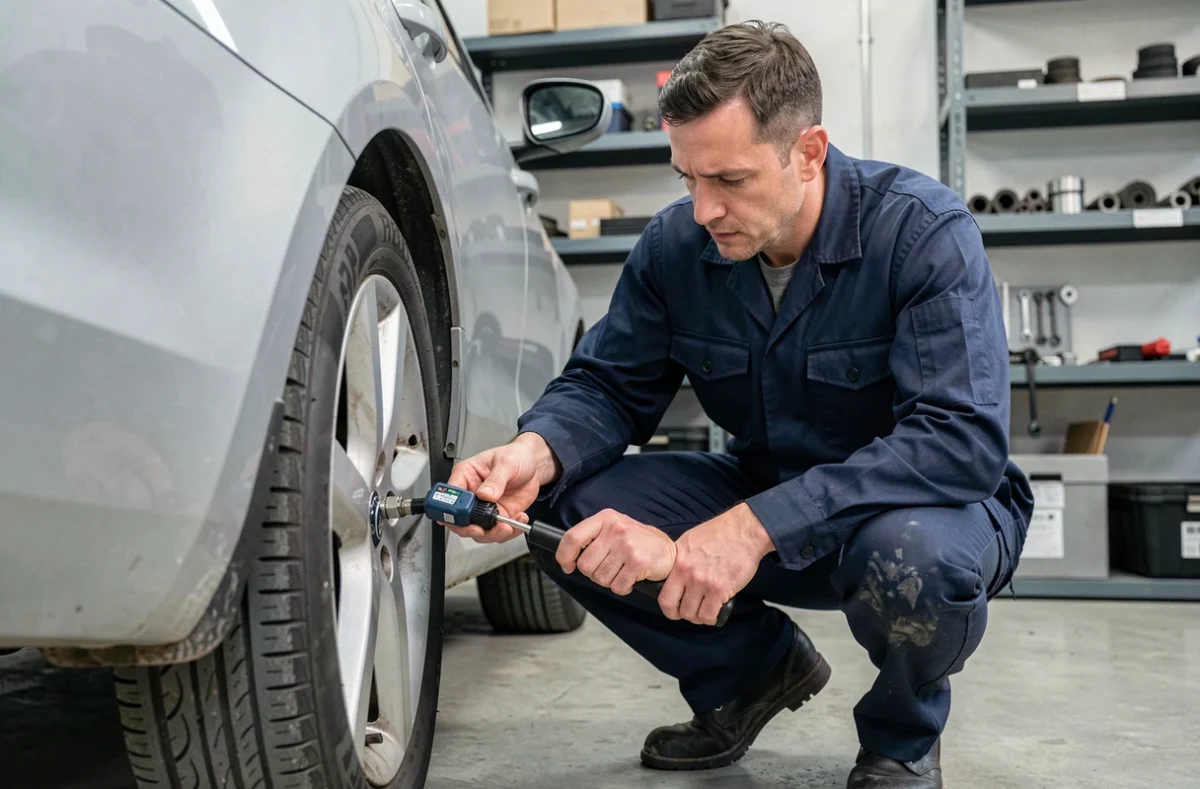
Since the extension of Series 01 of UN Regulation No. 141, TPMS requirements no longer apply only to passenger cars. Several categories of heavy vehicles and trailers are now covered by the regulations, with specific requirements for transmitting alerts between the towing vehicle and the trailer. This change affects the implications of disabling the system, depending on the type of vehicle involved.
Direct and indirect TPMS: two detection methods to distinguish
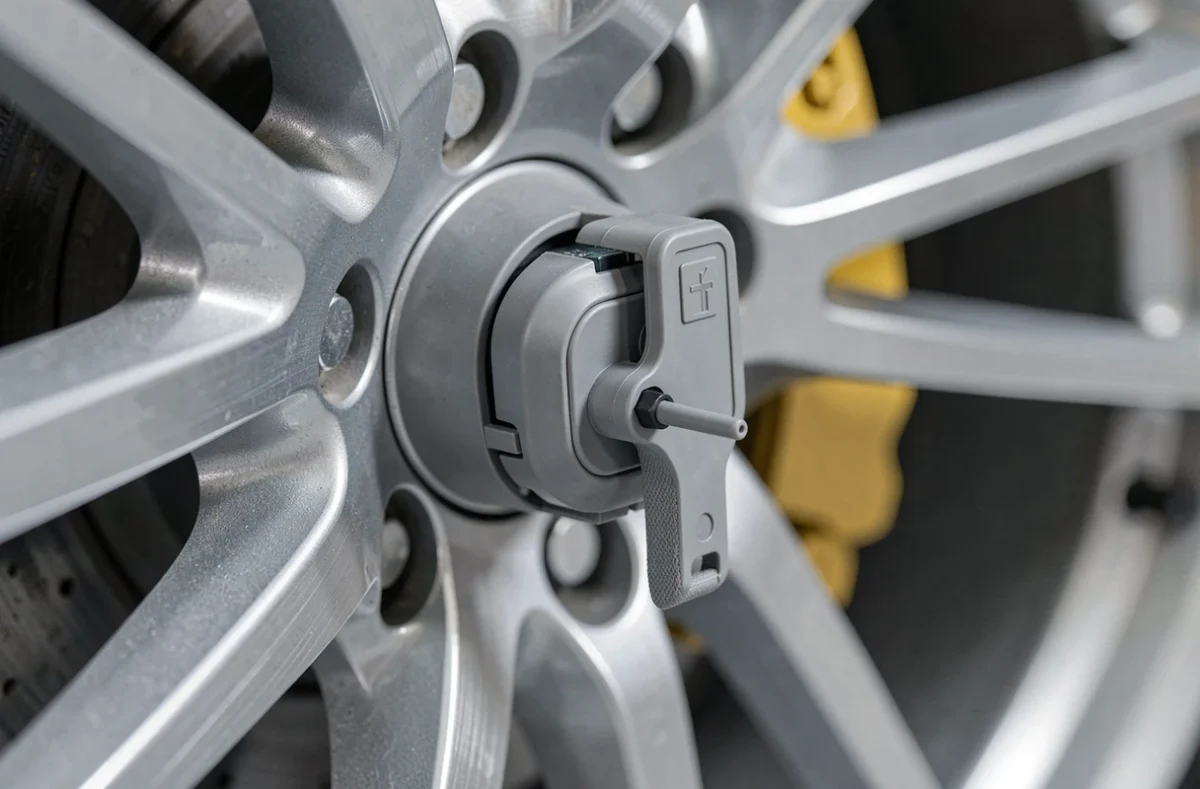
Direct TPMS uses physical sensors installed in each wheel. Each sensor measures pressure in real time and transmits the data to the vehicle’s control unit via radio frequency. Indirect TPMS does not measure pressure; instead, it uses data from the ABS sensors to detect differences in wheel rotation speed, which can indicate that a tire has lost volume.
This distinction matters when considering whether to disable your car’s TPMS, because the two technologies cannot be deactivated in the same way. With a direct system, disabling it involves working on the sensors or the receiving software. With an indirect system, the ABS-related software calibration is involved, affecting a broader safety system.
UN Regulation No. 141 also provides for a malfunction signal that is distinct from the low-pressure warning light. An illuminated TPMS warning light can indicate a fault in the system itself, not just insufficient tire pressure. This signal must appear within the regulatory timeframe after a fault is detected, meaning the system also monitors its own integrity.

Disabling TPMS: consequences by vehicle type
In a light vehicle, disabling the system removes the visual warning from the dashboard. The driver loses real-time information about a slow puncture or gradual loss of pressure. The main risks are uneven tire wear and, in extreme cases, a blowout at high speed.
Heavy vehicles: load and temperature concerns
In a heavy goods vehicle, operating pressures are significantly higher, and the tires carry loads that magnify the consequences of underinflation. An underinflated tire on a load-bearing axle heats up more, accelerating casing deterioration. Disabling TPMS on a heavy vehicle removes detection of overheating caused by underinflation.
UN Regulation No. 141 covers these categories specifically because the consequences of incorrect tire pressure are more serious than in light vehicles.
Tractor-trailer combinations: transmitting alerts between vehicles
The most complex case involves articulated vehicles. Series 01 of the regulation provides for a communication interface between the tractor and trailer to transmit TPMS alerts. In an articulated vehicle, TPMS can monitor the trailer’s tires from the tractor’s cab.
Disabling the system on the tractor does not necessarily disable trailer monitoring, and vice versa. Depending on the manufacturer’s system architecture, disabling it can create inconsistencies in the communication chain, resulting in persistent malfunction lights or false alerts. The consequences vary depending on whether the system uses a shared CAN bus or a dedicated link between the two vehicles.
- In a light vehicle, disabling the system affects a single control unit and up to four sensors.
- In a heavy vehicle, the number of sensors increases with the number of axles, and the loss of information concerns more critical operating pressures.
- In a tractor-trailer combination, disabling the system can affect communication between the vehicles and trigger cascading faults in both parts of the combination.
TPMS warning light on: diagnose the issue before taking action
The impulse to turn off the TPMS warning light often masks a problem that would be better identified. Seasonal wheel changes are a common cause of the warning light coming on even when there is no actual loss of pressure. Sensors fitted to winter wheels may not be recognized by the vehicle’s control unit if they have not been relearned.
A TPMS diagnostic tool can distinguish between three situations:
- Actual pressure loss in one or more tires, requiring a physical inspection.
- A pairing fault between the sensors and the control unit, typically after changing wheels.
- A malfunction in the system itself (failed sensor, depleted sensor battery, or reception fault).
In the first case, correcting the tire pressure turns off the warning light. In the other two, the warning light will not go out without work on the system or its components. Disabling TPMS to turn off the warning light means masking a useful diagnostic signal.
Manual tire pressure checks: what TPMS does not cover
TPMS does not trigger a warning as soon as pressure drops by one tenth of a bar. UN Regulation No. 141 defines activation thresholds based on pressure loss while driving or reaching a minimum pressure. A tire can be underinflated without the warning light coming on, as long as the regulatory threshold has not been reached.
This blind spot makes manual checks when the tires are cold necessary, even on a vehicle with a functioning system. TPMS is a safety net, not a substitute for a pressure gauge. Manufacturers state this in their maintenance manuals: the system issues warnings under certain conditions, not all conditions.
For a vehicle with TPMS disabled, manual checks become the only line of defense against gradual underinflation. Without sensors or regular checks, pressure problems can be detected only by how the vehicle feels to the driver—an unreliable, late indicator at a steady speed.