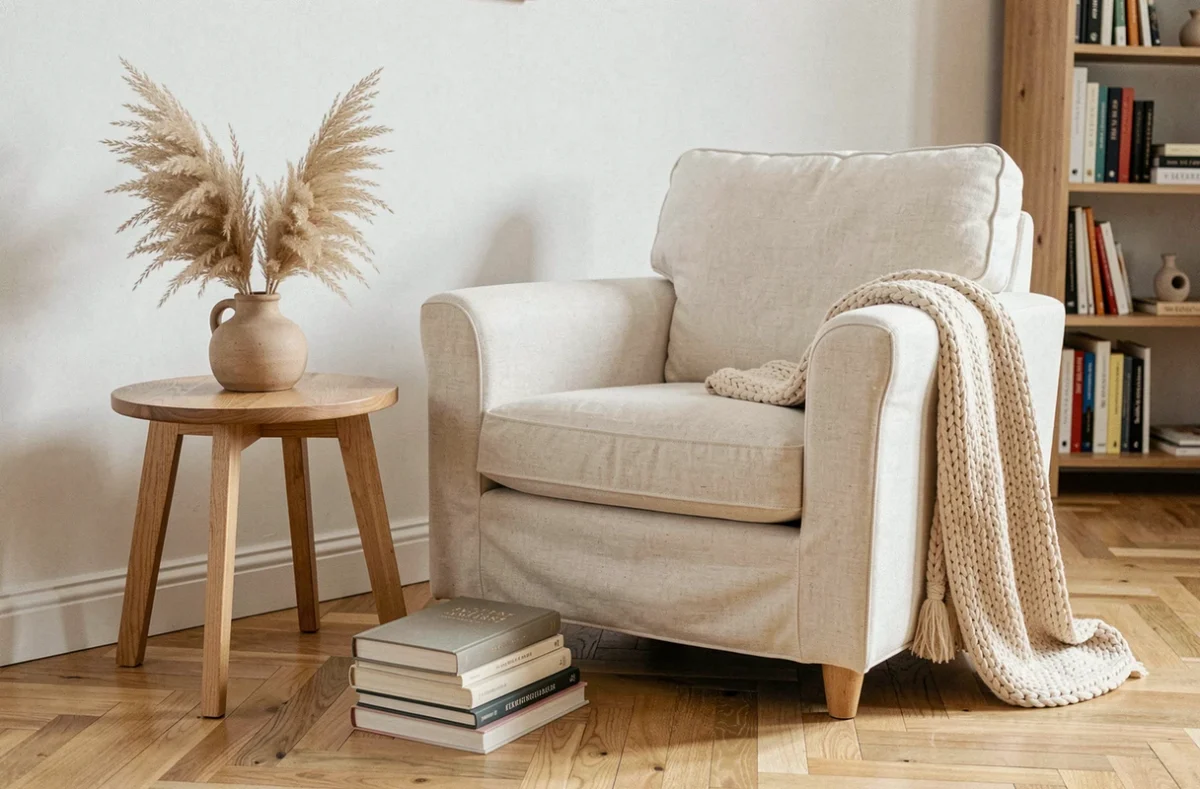
A peeling wall in the entryway, a living room where the cushions smell musty, a wobbly chest of drawers banished to the garage: that’s often where we start—not with a Pinterest board. Freshening up your home without filling a dumpster with waste or breathing in solvents for three weeks is possible, as long as you sort out what’s worth keeping, repairing or replacing.
Indoor air quality and decorating choices: what the label doesn’t tell you
In France, paints, adhesives and decorative wall coverings carry a label indicating volatile pollutant emissions, rated from A+ to C. It’s a useful guide when buying a tin of paint or a roll of wallpaper. The catch is assuming that an A+ rating guarantees healthy air once several materials are combined in the same room.
This label doesn’t cover furniture. For a sofa, chest of drawers or shelving unit, look for information from the manufacturer about the adhesives and foams used. With a second-hand piece of furniture, the question is different: old varnishes or lacquers may release fewer compounds than some low-end new panels, but sanding in a poorly ventilated space also releases particles you don’t want to breathe in.
In practice, it’s worth ventilating the room during and after any work, even a simple coat of water-based paint. And when you bring home a second-hand find, leaving it to air out for a few days in an open space (balcony, garage) before bringing it inside is the simplest precaution.

Reuse and second-hand home decor: knowing when to stop
Reuse has its limits. You can find treasures at reuse centers or on resale platforms, but an old piece of furniture isn’t necessarily a sustainable purchase without checking it first. Structural condition (joints, legs, drawers) and the repairs needed vary enormously from one item to another. Organizations that collect and restore these pieces invest time and resources in the work, which explains why some refurbished furniture isn’t all that cheap.
If you’re looking for ranges that combine new pieces with an accessible style, Direct Home’s home decor offers pieces designed to fit into an existing interior without replacing everything.
When repairing costs more than replacing
A chair with a deeply split leg, an armchair whose foam has collapsed after twenty years, a wooden frame eaten away by damp: in these cases, repairs require skills and supplies that often cost more than a comparable new item.
Our rule of thumb: if restoring an item takes more than two hours of work or requires a tool you don’t own, compare the cost with buying a new item of equivalent quality.
By contrast, repainting a piece of furniture in good structural condition is one of the most cost-effective improvements. A light sanding, a bonding primer and two coats of paint (preferably with an A+ rating) can turn a dated chest of drawers into a contemporary piece for just a few dozen euros.
Natural light and decorative lighting: separating visual comfort from health
Bringing more daylight into your home improves the atmosphere and reduces electricity use. Clearing the windows, choosing light sheers instead of opaque double curtains, placing a mirror opposite a light source: these simple steps can change how an entire room feels.
One thing to keep in mind: window glass blocks much of the UVB needed to produce vitamin D. A light-filled home is pleasant to live in, but it’s no substitute for going outdoors. This isn’t a decorating detail; it’s a health fact that’s often overlooked when optimizing a space.
Artificial lighting: combine three layers
Instead of adding more trendy light fixtures, think about what each one is for:
- General lighting (a ceiling light or pendant) that illuminates the room evenly, in a neutral or warm color temperature depending on how the space is used
- Task lighting (a desk lamp, reading light or countertop spotlight) aimed precisely where it’s needed
- Ambient lighting (a low-voltage string of lights, table lamp or discreet LED strip) that adds depth in the evening without causing glare
Layering these three types of lighting creates a more convincing result than any designer chandelier placed alone in the center of the ceiling.
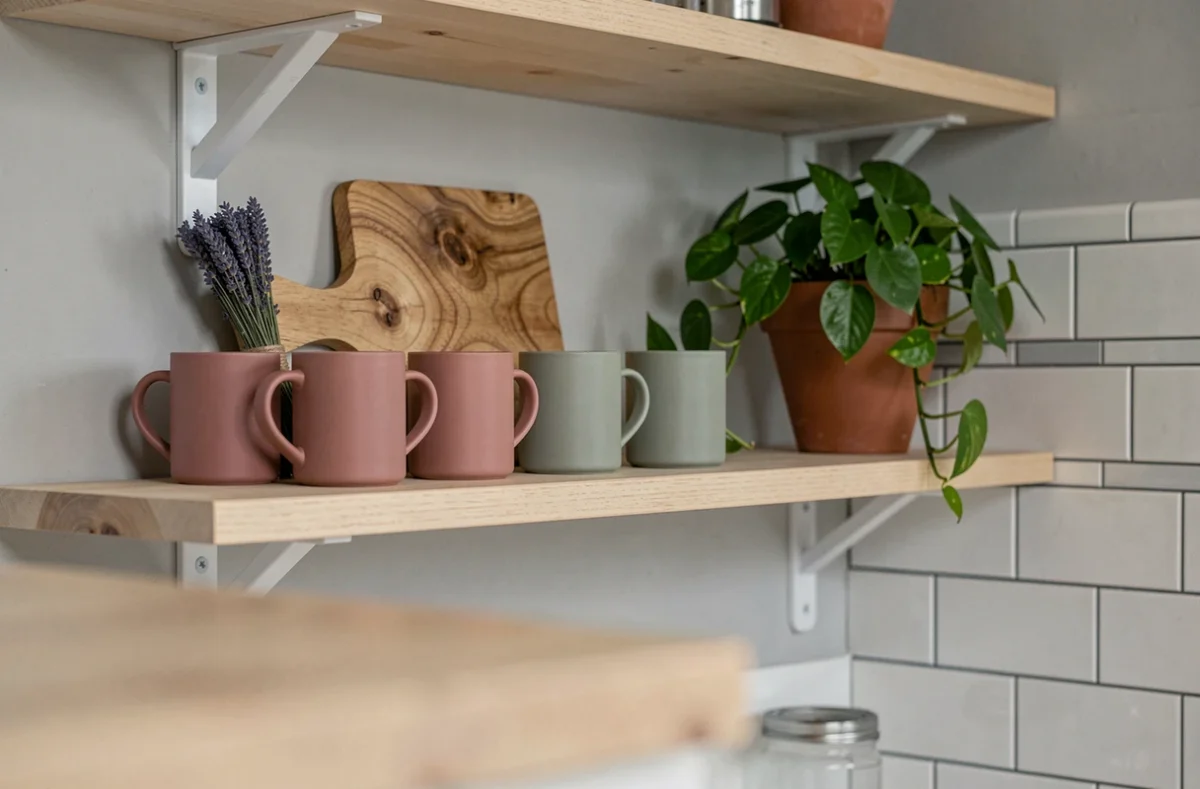
Natural materials in home decor: choose the right ones for each room
Raw wood, linen, stone, rattan: these materials have featured in home decor trends for years. We choose them for their texture and perceived durability, but every natural material has care requirements that depend on the room it’s used in.
Untreated wood in a poorly ventilated bathroom swells and warps within a few months. A porous stone kitchen countertop absorbs grease stains if it hasn’t been sealed. Rattan exposed to prolonged direct sunlight dries out and breaks.
Before falling for an item made from a raw material, check two things: the room’s usual humidity level and its exposure to direct sunlight. These two factors determine whether the item will develop a patina over time or deteriorate within a year.
Colors and textures: fewer elements, thoughtfully placed
Changing the feel of a room doesn’t necessarily mean repainting an entire wall. A corduroy cushion on a linen sofa, a terracotta vase on a black metal shelf, a thick wool rug on a polished concrete floor: contrasting textures add visual depth without a big budget.
- Limit the palette to three dominant colors per room to avoid visual clutter
- Vary the materials rather than the shades: a mix of beige linen, wood and ceramics creates more depth than a rainbow of cushions
- Try a new accent color on an easy-to-replace item (a cushion cover, frame or candle) before committing to a piece of furniture or a wall
A home that works doesn’t need to be changed all at once. Often, moving a piece of furniture, removing one unnecessary item or simply fixing something that squeaks is enough to make your space feel comfortable again.