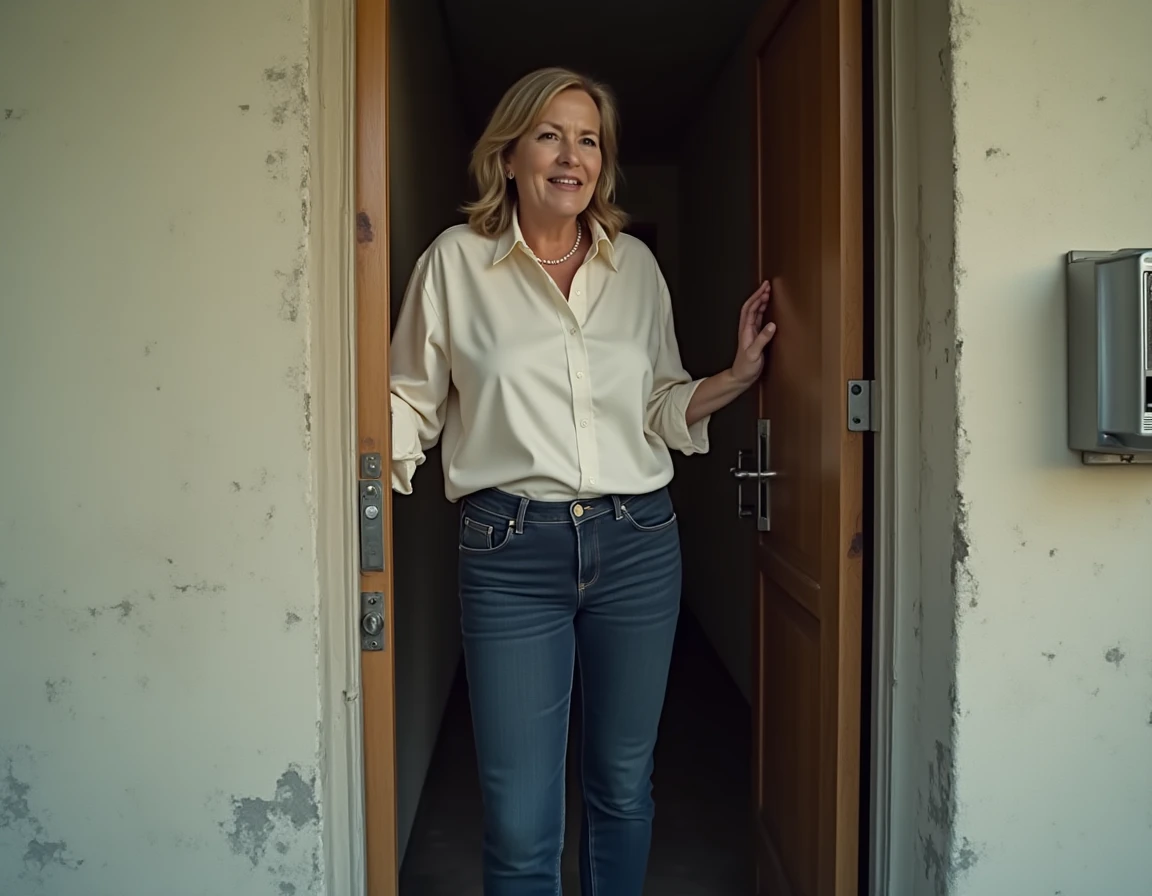
Rumeysa Gelgi measures 2.15 m. This figure, validated by the Guinness World Records, makes her the tallest living woman on the planet. Behind this record lies a daily life shaped by a rare medical condition and material constraints that most built environments do not account for.
Weaver Syndrome and abnormal growth: understanding the medical origin

Rumeysa Gelgi’s height is not a result of simple genetic chance. It is linked to Weaver syndrome, an extremely rare genetic disorder that causes accelerated bone growth from early childhood. This syndrome affects the rate of skeletal maturation and results in a stature well beyond typical growth curves.
Unlike acromegaly, which involves an overproduction of growth hormone in adulthood, Weaver syndrome manifests in the early years of life. The bones grow faster than normal, necessitating regular medical follow-ups and frequent bone assessments.
The story of the tallest woman in the world is not just about a spectacular number. It illustrates how a rare genetic pathology shapes an entire existence, from growth to daily gestures.
Domestic ergonomics and transportation: concrete adaptations for a height of 2.15 m

Living in a world designed for people measuring between 1.55 m and 1.85 m poses underestimated challenges. For Rumeysa Gelgi, every living space requires custom adaptation.
Furniture and housing
A standard bed typically measures 1.90 m or 2 m in length. At 2.15 m, sleeping comfortably requires specially made bedding. Kitchen countertops, sink heights, door frames: everything must be rethought or circumvented.
Moving through a narrow hallway, passing through a low door, sitting on a standard office chair: these seemingly trivial actions become repeated physical obstacles. Rumeysa Gelgi also uses a wheelchair for part of her mobility, due to the constraints her stature imposes on her locomotor system.
Transportation
Taking a plane, train, or standard car is not feasible without adjustments. The space between airplane seats, for example, is calibrated for sizes well below 2 m. Every trip involves anticipated logistics and often additional costs.
- The bed and domestic furniture must be custom-made or modified to exceed standard dimensions.
- Clothing is not available off the rack: each piece is tailored to her measurements.
- Public transport and standard vehicles require specific adaptations or assistance.
Social perception and media visibility: between curiosity and representation
The media treatment of tall individuals oscillates between fascination and sensationalism. For decades, height records have been presented through a sensationalist lens, as mere curiosities.
The discourse surrounding Rumeysa Gelgi has shifted. Her presence in international media, particularly during her meeting with Jyoti Amge (the shortest woman in the world) in November 2024, has been treated as a symbolic event focused on celebrating bodily differences, rather than as a spectacle.
This shift is significant. Recent content presents her as a figure of representation and acceptance of difference, not just as a record holder. Rumeysa Gelgi publicly expresses herself on social media, sharing aspects of her daily life and asserting a life that is not reduced to her height.
Accessibility and universal design: what tall stature reveals
Rumeysa Gelgi’s journey highlights a reality often overlooked in discussions about accessibility. Accessibility standards primarily focus on traditional motor disabilities, visual or auditory impairments. Very tall individuals do not benefit from any specific reference in the design of public spaces.
Counter heights, fitting room dimensions, hospital bed sizes, and seating spacing in performance venues: nothing is designed for a frame over 2 m. This lack of consideration is not due to a lack of goodwill, but rather a design bias. Ergonomic standards are calculated based on population averages, and statistical extremes remain invisible in specifications.
- Standard hospital beds do not exceed 2 m, complicating any prolonged hospitalization.
- Public transport seats (buses, planes, trains) are sized for a maximum frame well below 2.15 m.
- Shower stalls, toilets, and public sanitary spaces do not provide an appropriate ceiling height.
- Technical clothing (medical suits, sportswear) does not exist in these sizes off the shelf.
Rumeysa Gelgi illustrates, through her daily life, the limitations of an environment built for the average. Her journey prompts reflection on what universal design truly means, beyond the usual categories of disability.
Her height record remains a medical and statistical fact. What leaves a lasting impression is the ability to build a life in a world whose dimensions are not designed for her, and to transform this reality into a lever for visibility for all atypical bodies.